
Can You Have a Pool in Utah Winters?
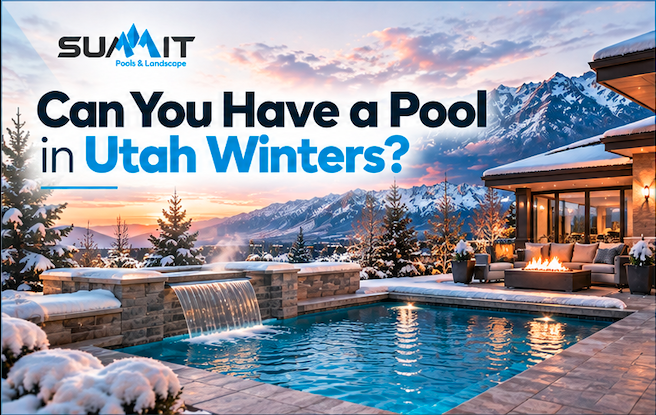
When most people picture a backyard swimming pool in Utah, they're probably imagining July—not January. Blue water. Hot afternoon. Kids swimming. Dinner on the patio. Then winter arrives.
Snow covers the backyard, temperatures drop below freezing, and suddenly that beautiful swimming pool has to survive an entirely different environment. That leads to a question we hear from homeowners planning a pool:
Can you actually have a pool in Utah winters?
Absolutely. Thousands of pools live through Utah winters every year. The more important question is what you want your pool to do during winter.
Most Northern Utah homeowners winterize their swimming pools and reopen them in the spring. But with the right pool design, heating, equipment, controls, cover, and winter operating plan, some pools can be designed for extended-season or even winter use. The key is planning for Utah's climate from the beginning.
Utah Pools Have to Handle More Than Summer Heat
Northern Utah is a fantastic place to own a swimming pool, but our climate creates some unique considerations. A pool may experience hot, dry conditions during summer and then freezing temperatures, snow, ice, and repeated freeze-thaw cycles during winter.
That means a Utah pool isn't simply designed for swimming season. The entire system—including the pool shell, plumbing, equipment, decking, drainage, water features, and landscaping—should be planned with all four seasons in mind. Summit's existing pool-maintenance guidance identifies proper winterization as one of the major differences between pool ownership in Northern Utah and warmer climates. Summit Pools Utah
What Happens to a Pool During a Utah Winter?
You generally have two approaches: Winterize the pool and prepare it for a period of inactivity, or intentionally keep the pool operating with equipment designed and managed for cold-weather use. Those are very different strategies.

Option 1: Winterizing Your Pool
For many Northern Utah homeowners, this will be the most practical option. As swimming season ends and temperatures fall, the pool is prepared for winter.
The exact procedure depends on the pool and equipment, but winter preparation may involve balancing the water, cleaning the pool, managing the water level, protecting plumbing, preparing pumps and equipment, winterizing water features, and securing the cover. Summit Pools Utah The goal isn't simply to put a cover over the water. It's to protect the entire pool system from freezing conditions.
Why Is Winterization So Important?
Water expands when it freezes. Water trapped inside vulnerable plumbing, pumps, filters, heaters, water features, or other components can potentially cause expensive damage when temperatures fall below freezing. That's why winterizing a Utah pool isn't something we'd treat as an afterthought. It should be part of the ownership plan before the pool is even constructed.
Option 2: Can You Keep a Pool Open During Winter in Utah?
Potentially, yes—but this requires a very different approach. A pool that remains operational through freezing weather needs to be intentionally equipped and managed for those conditions. That may involve appropriate heating, circulation, freeze-protection controls, covers, equipment protection, and ongoing monitoring.
Keeping the water warm is only one part of the equation. You also have plumbing, pumps, filters, heaters, water features, decking, snow accumulation, and potentially extreme cold to consider. And if equipment stops operating during a freezing night because of a mechanical problem or power outage, the situation can become much more serious than it would during July. So if year-round swimming is important to you, tell your pool designer before the pool is built.
How Do You Protect a Pool From Freezing?
There isn't one piece of equipment that magically makes a pool winter-proof. Instead, winter protection involves several parts of the system working together.

Proper winter planning may include protecting plumbing, preparing pumps and equipment, addressing water features, managing water appropriately, securing the pool cover, and making sure surrounding drainage and hardscaping are prepared for snow, ice, and freeze-thaw cycles. Summit Pools Utah
Can You Heat a Pool During a Utah Winter?
Yes, but there's an important difference between being able to heat a pool and it being practical to maintain swimming temperatures throughout the entire winter. The colder the air becomes, the harder your heating system has to work to maintain the desired water temperature.
Pool size matters. Desired temperature matters. Wind exposure matters. Heater type matters. And your pool cover can matter considerably. Summit's maintenance guidance notes that an automatic pool cover can help reduce heat loss and evaporation, while its pool-cost guide identifies heating as one of the more variable ongoing pool expenses. Summit Pools Utah
That means a homeowner who wants occasional extended-season swimming has a very different use case from someone wanting an 85-degree pool while there's snow on the patio.
What About a Heated Plunge Pool?
This is where plunge pools become particularly interesting.
If your dream is sitting in warm water surrounded by snow rather than swimming laps in January, you may not need to heat an enormous body of water. A smaller heated plunge pool or pool-and-spa combination can provide a different winter experience while giving you a full pool during warmer months. This is one reason we recommend designing around how you'll actually use the water, rather than automatically building the largest pool the backyard can accommodate.
What About an Integrated Spa?
An integrated spa is another option worth considering if winter use is important. You might winterize the main swimming pool while maintaining a separate strategy for a spa, depending on how the system is designed. That can give homeowners the best of both worlds:
A large swimming and entertaining space during warmer months and a smaller heated environment when temperatures fall. Again, this should be discussed during design because plumbing, heating, covers, equipment, and controls all need to work with the intended operating strategy.
Automatic Pool Covers Become Especially Valuable in Utah
We're already big proponents of automatic covers for Utah pools. They can help reduce evaporation, debris, chemical demand, and heat loss. Summit Pools Utah
During colder weather, reducing heat loss becomes particularly important for a pool you're trying to keep warm. But winter conditions introduce another consideration: snow and ice.
Your pool builder and cover manufacturer should explain how your particular cover system should be managed during winter, including any limitations involving snow loads or accumulated ice. Follow the instructions for the specific system installed rather than assuming every automatic cover can be treated the same way.
Don't Forget the Area Around the Pool
Winter isn't only hard on the swimming pool. It's also affecting everything around it. Repeated freezing and thawing can influence decking, soil, drainage, retaining walls, and hardscape. Summit's existing Utah climate guidance specifically identifies freeze-thaw cycles, snow, ice, soil conditions, and drainage as important considerations for pool construction in Northern Utah. Summit Pools Utah
That's one of the advantages of designing the entire backyard together. The pool may look like the centerpiece, but what's underneath and around it can be just as important to its long-term performance.
Should You Drain Your Pool for the Winter?
Don't assume that closing a pool means completely draining it.
The correct winter water level and procedure depend on the type of pool, plumbing, cover, equipment, and winterization method.
Improperly draining a pool can create its own problems.
This is an area where we'd follow the requirements for the specific pool and equipment installed, rather than applying a generic winter checklist to every backyard.
What Happens to Waterfalls and Other Water Features?
Water features deserve their own winter plan.
That includes things like:
Sheer descents
Waterfalls
Deck jets
Fountains
Spa spillovers
Specialty plumbing
If the pool is being winterized, these systems may also need to be prepared for freezing temperatures. Summit's current maintenance guidance specifically includes water features among the components that may require winterization. Summit Pools Utah
This is another reason to think about winter when you're choosing pool features—not six months after construction is finished.
How Much Does It Cost to Keep a Pool Heated in Winter?
There's no responsible one-size-fits-all number. Winter heating cost can vary dramatically based on pool volume, heater type, water temperature, outside temperature, wind, cover use, equipment efficiency, and how frequently the pool is heated. Summit's current ownership-cost guide already identifies heating as one of the most variable pool expenses. Summit Pools Utah
If year-round heating is part of your dream pool, tell us that during design. Then equipment and operating expectations can be discussed before you commit to a particular pool size and configuration.
Designing a Pool for All Four Utah Seasons
One of the biggest mistakes homeowners can make is designing a Utah pool as though summer lasts all year. It doesn't. The better approach is to think about the entire calendar.

In spring, you're opening and preparing.
In summer, you're swimming and maintaining.
In fall, you're managing leaves, changing temperatures, and preparing for winter.
And during winter, you're either protecting a properly winterized pool or actively managing a system intentionally designed to remain operational.
A well-designed Utah pool accounts for all four.
Can You Build a Pool During Winter in Utah?
Sometimes portions of pool construction can continue during colder months, but weather affects different phases differently.
Freezing temperatures, snow, storms, and ground conditions can affect excavation, concrete work, landscaping, decking, and scheduling. Summit's construction guide notes that some stages are more weather-sensitive than others and that forcing work during unsuitable conditions isn't always in the homeowner's best interest. Summit Pools Utah
That doesn't mean you should wait until summer to start planning.
In fact, starting the design, budgeting, permitting, and planning process earlier can help position your project for the swimming season you want.
So, Can You Have a Pool in Utah Winters?
Absolutely.
Having a pool in Northern Utah doesn't mean worrying about it every time snow appears in the forecast.
It means designing and maintaining the pool appropriately for the climate where you live.
For many homeowners, that means enjoying the pool through the warmer months and properly winterizing it when freezing weather arrives.
For others, it might mean designing a heated plunge pool, integrated spa, or specialized pool system around extended-season use.
The important part is deciding what you want before construction begins.
At Summit Pools & Landscape, we design complete outdoor environments around Northern Utah properties, lifestyles, and seasonal conditions—not just how a backyard looks on a perfect July afternoon.
Related Articles
Frequently Asked Questions
-
Yes. Inground pools are common in Utah and can be designed for the state's seasonal climate. Proper construction, drainage, plumbing protection, equipment selection, and winterization are particularly important in areas that experience freezing temperatures.
-
Most seasonally operated Northern Utah pools require appropriate winter preparation because freezing temperatures can damage vulnerable plumbing and equipment. The exact procedure depends on the pool and equipment installed.
-
Some pools can be designed and operated for extended-season or winter use, but doing so requires appropriate heating, circulation, freeze protection, covers, monitoring, and an operating plan for freezing weather.
-
The appropriate method depends on whether the pool is being winterized or kept operational. A winterized pool requires vulnerable plumbing and equipment to be prepared for freezing conditions, while an operating winter pool requires an appropriate circulation and freeze-protection strategy.
-
It can be. Heating costs vary substantially based on pool size, desired water temperature, outdoor temperature, heater type, wind exposure, cover use, and equipment efficiency. Heating is one of the more variable expenses associated with pool ownership.
