
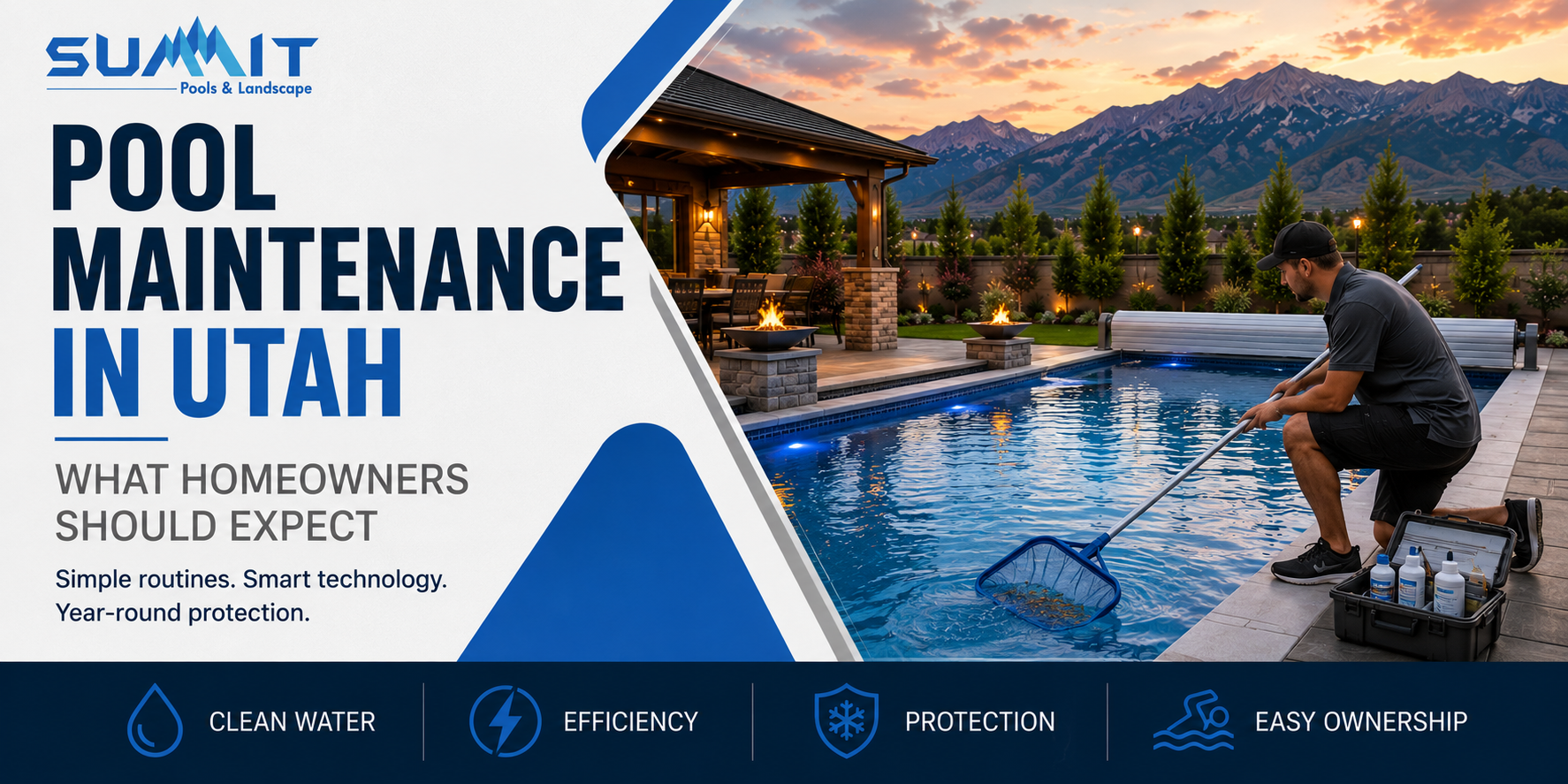
Owning a swimming pool in Utah can completely change the way you spend summer.
Instead of packing up the car, driving somewhere crowded, and trying to make an entire day out of swimming, your backyard becomes the destination.
But before building a pool, most homeowners eventually ask:
How much maintenance is this actually going to require?
The answer is usually less intimidating than people expect—especially with modern pool equipment and automation—but Utah's climate does create some unique responsibilities.
Homeowners throughout Northern Utah, Salt Lake City, Davis County, Weber County, Layton, Ogden, and surrounding communities need to think about everything from hot summer evaporation to freezing winter temperatures.
Here's what pool ownership and maintenance really look like throughout the year.
What Regular Pool Maintenance Includes
Most pool maintenance comes down to keeping three things working properly:
Water quality
Circulation
Cleanliness
During swimming season, that generally means checking water chemistry, removing debris, maintaining the filtration system, and making sure equipment is operating correctly.
Weekly Pool Care
A typical weekly routine may include:
Testing chlorine or sanitizer levels
Checking pH
Removing leaves and debris
Emptying skimmer baskets
Brushing or cleaning surfaces when needed
Checking water level
Looking over pumps and equipment
Modern automation can reduce how much hands-on attention these tasks require.
Utah's Hot Summers Affect Pool Maintenance
Northern Utah summers can be hot, sunny, and dry.
That's great for swimming—but heat and intense sun can affect pool water.
Evaporation
Dry Utah air can increase evaporation, particularly during the hottest parts of summer.
Homeowners may need to add water periodically to maintain the correct operating level.
An automatic pool cover can help significantly by reducing evaporation when the pool isn't being used.
Increased Sanitizer Demand
Warm temperatures, sunlight, and heavy pool use can increase sanitizer demand.
That's why checking water chemistry regularly becomes especially important during:
Heat waves
Pool parties
Holidays
Extended periods of heavy use
A well-maintained system can usually handle these fluctuations without becoming a major inconvenience.
Understanding Pool Water Chemistry
Pool chemistry sounds complicated until you understand the basics.
The goal is simply to keep the water comfortable, clean, and balanced.
You'll generally monitor:
Sanitizer
Chlorine or another sanitizer helps keep the water clean.
pH
Proper pH helps protect swimmers, equipment, and pool surfaces.
Alkalinity
Alkalinity helps keep pH stable.
Calcium Hardness
Water hardness can affect pool surfaces and equipment over time.
Northern Utah can have hard water, making proper balancing especially important.
You don't need to become a chemist to own a pool. Today's testing systems and professional maintenance services make managing water much easier than it used to be.
Saltwater vs. Chlorine Maintenance
One of the most common questions homeowners ask is whether a saltwater pool requires less maintenance.
A saltwater pool still uses chlorine—it simply produces it through a salt chlorine generator instead of relying entirely on manually added chlorine.
Saltwater Pools
Saltwater systems may provide:
More consistent chlorine production
Softer-feeling water
Less frequent handling of chlorine products
However, homeowners still need to monitor chemistry and maintain the salt system.
Traditional Chlorine Pools
Traditional chlorine systems are familiar, straightforward, and easy to adjust when needed.
Both can work extremely well in Northern Utah.
Read Saltwater vs. Chlorine Pools in Utah for a complete comparison.
Pool Filters and Circulation
Your pool's circulation system continuously moves water through the filtration equipment.
Good circulation helps:
Distribute chemicals
Remove debris
Reduce stagnant areas
Maintain consistent water quality
Modern variable-speed pumps are particularly useful because they can operate efficiently at different speeds depending on what the pool needs.
Pool filters also need periodic cleaning or maintenance depending on the type of filter installed.
Automatic Pool Covers Can Reduce Maintenance
For Utah homeowners, an automatic cover is one upgrade that can make ownership noticeably easier.
A cover can help reduce:
Leaves and debris
Water evaporation
Heat loss
Chemical demand
It can also improve safety when used correctly.
Because Northern Utah experiences dry summers and cooler nights, reducing both evaporation and heat loss can be especially valuable.
What Happens in Fall?
As temperatures cool, pool usage naturally begins to slow down.
Fall maintenance typically includes:
Removing leaves
Monitoring water chemistry
Adjusting heating schedules
Preparing for winterization
Trees dropping leaves can temporarily increase cleaning needs, especially for pools surrounded by mature landscaping.
A cover can make a major difference during this time of year.
Winterizing a Pool in Utah
Winterization is one of the most important differences between owning a pool in Utah and owning one in a warm-weather state.
Northern Utah's freezing temperatures mean plumbing and equipment must be properly protected.
Winter preparation may involve:
Balancing pool water
Cleaning the pool
Lowering or managing the water level as appropriate
Protecting plumbing
Preparing pumps and equipment
Winterizing water features
Securing the cover
The exact process depends on your pool design and equipment.
Why Proper Winterization Matters
Water expands when it freezes.
If water remains in vulnerable plumbing or equipment, freezing can potentially cause damage.
That's why pool winterization Utah homeowners can rely on should always follow the requirements of the specific system installed.
What About Freeze-Thaw Cycles?
Even after the pool itself is winterized, Utah weather continues affecting the surrounding backyard.
Repeated freezing and thawing can influence:
Decking
Soil
Drainage
Hardscape
Retaining walls
This is why proper site preparation matters before the pool is ever installed.
A pool designed for Northern Utah's freeze-thaw climate should consider long-term drainage, soil conditions, and winter performance from the beginning.
Our Utah Soil & Pool Installation Challenges guide explains why these factors are so important.
Spring Pool Opening
Once warmer weather returns, it's time to prepare the pool for another swimming season.
Spring opening typically includes:
Removing or opening the pool cover
Inspecting equipment
Restarting circulation
Checking water chemistry
Cleaning the pool
Testing heaters and automation
Starting early can help ensure the pool is ready as soon as Utah temperatures become comfortable for swimming.
How Much Time Does Pool Maintenance Take?
This varies based on:
Pool size
Landscaping
Equipment
Automation
Cover system
How frequently the pool is used
A basic pool without automation may require more hands-on attention.
A modern custom pool with smart controls, efficient filtration, automatic sanitation, and a quality cover can significantly reduce routine work.
For many homeowners, maintenance becomes a manageable weekly habit rather than a major chore.
Can You Hire Someone to Maintain Your Pool?
Absolutely.
Some homeowners enjoy managing their own pools. Others prefer professional service.
Professional maintenance may include:
Water testing
Chemical balancing
Cleaning
Equipment inspections
Seasonal opening
Winterization
That flexibility means pool ownership doesn't necessarily require you to personally handle every task.
Is Pool Maintenance Expensive?
Pool ownership does involve ongoing costs.
These may include:
Chemicals
Electricity
Water
Equipment servicing
Seasonal maintenance
Heater operation
Your actual costs depend heavily on the pool, equipment, usage, and features.
Energy-efficient pumps, covers, automation, and thoughtful equipment selection can help keep operating costs under control.
For a broader look at ownership expenses, read How Much Does It Cost to Build a Pool in Utah?
A Well-Designed Pool Is Easier to Own
One of the best ways to simplify pool maintenance is to make smart decisions during the design process.
That may include:
Automatic pool covers
Efficient pumps
Smart automation
Appropriate filtration
Easy-access equipment placement
Proper drainage
Thoughtful landscaping
A pool shouldn't only look beautiful the day construction is finished.
It should be designed to make ownership enjoyable for years afterward.
Ready to Build a Pool Designed for Utah?
If you're considering pool installation Northern Utah, maintenance should be part of the conversation from the very beginning.
Summit Pools can help you design a pool around your property, lifestyle, maintenance preferences, and Northern Utah's unique climate.
We proudly serve homeowners throughout Salt Lake City, Davis County, Weber County, Layton, Ogden, and surrounding communities.
Schedule a pool consultation today and let's design a backyard that's beautiful, functional, and easier to enjoy year after year.
Frequently Asked Questions
-
During swimming season, homeowners should typically check water chemistry and basic pool conditions at least weekly. Cleaning frequency depends on landscaping, pool use, weather, and whether the pool has an automatic cover.
-
Utah pools require seasonal maintenance because of hot summers and freezing winters. Proper winterization and spring opening are particularly important in Northern Utah.
-
Saltwater systems automate chlorine production, which can reduce some routine chemical handling. However, water chemistry still needs to be monitored and the salt chlorine generator requires periodic maintenance.
-
Yes. Northern Utah's freezing temperatures make proper winter preparation essential for protecting plumbing, equipment, water features, and other pool components.
-
Yes. Smart automation can manage circulation schedules, heaters, lighting, sanitation systems, and other equipment, making routine pool ownership much more convenient.
