
What to Expect During Pool Construction in Utah: Step-by-Step Guide
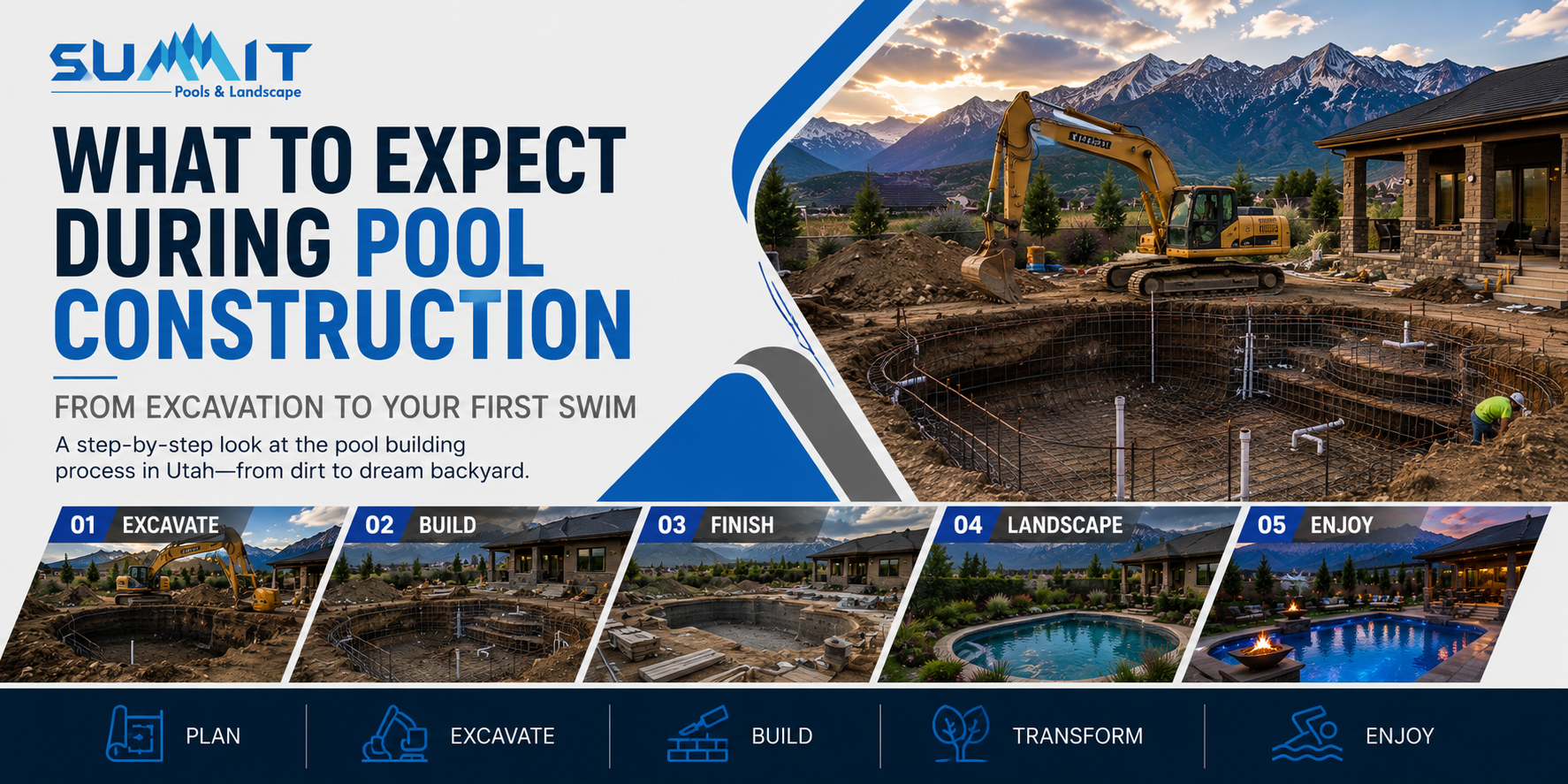
You've approved the design, selected your pool features, finalized the details, and construction day is finally approaching.
Then comes the question almost every homeowner asks:
What is actually going to happen to my backyard?
Building an inground pool is exciting, but there's no getting around the fact that construction temporarily turns part of your property into a jobsite.
There will be equipment. There will be dirt. There will be crews coming and going. And at certain points, your backyard may look considerably worse before it starts looking better.
Knowing what to expect makes the process much easier.
For homeowners considering pool installation Northern Utah, here's a step-by-step look at how a typical pool construction project progresses and what you can expect along the way.
Before Construction Begins
Long before an excavator arrives, important work is already happening behind the scenes.
Depending on the project and municipality, pre-construction may include:
Finalizing pool plans
Engineering
Obtaining permits
Identifying utilities
Confirming property setbacks
Planning equipment locations
Scheduling subcontractors
Reviewing site access
Permit requirements can vary throughout Salt Lake City, Davis County, Weber County, Layton, Ogden, and neighboring Northern Utah communities.
That's one reason working with an experienced local contractor matters.
Read our guide to Pool Permits in Utah: What Homeowners Need to Know for more information about this stage.
Step 1: Preparing the Backyard
Before excavation begins, the construction team needs access to the pool area.
That can mean temporarily removing or protecting:
Fencing
Gates
Landscaping
Irrigation
Sod
Hardscape
Equipment needs enough room to safely reach the backyard.
Expect Some Disruption
This is one part homeowners sometimes underestimate.
Heavy equipment traveling repeatedly through a side yard can affect grass, landscaping, and surrounding areas.
Your contractor should discuss access before construction so you understand which parts of the property may be affected.
Step 2: Pool Layout
Next, the pool's location and shape are marked in the yard based on the approved design.
This is when the project begins moving from a drawing to something you can physically see.
It's also a good opportunity to visualize:
Pool orientation
Steps and entries
Spa placement
Deck areas
Outdoor living spaces
Views from the house
Then comes the dramatic part.
Step 3: Excavation
Excavation is usually the moment the project suddenly feels real.
Heavy equipment removes soil to create the basic shape and depth of the pool.
And yes:
There will be a lot of dirt.
Often much more than homeowners expect.
Some soil may be hauled away, while other material may be used elsewhere on the property depending on the project.
Utah Soil Can Affect Excavation
Northern Utah properties may contain:
Rocky soil
Expansive clay
Fill material
High or low areas
Sloped terrain
Unexpected underground conditions can affect excavation time and site preparation.
Our guide to Utah Soil & Pool Installation Challenges explains why what's underneath your backyard matters so much.
Step 4: Structural Construction
Once excavation is complete, work begins on the pool's structural components.
For a gunite or concrete pool, this typically includes installing reinforcing steel that helps establish the pool's shape and structural framework.
At this stage, you'll clearly see:
Steps
Benches
Baja shelves
Spa areas
Pool depth transitions
The backyard still looks very much like a construction site, but the pool itself begins taking recognizable form.
Step 5: Plumbing and Equipment Preparation
Before the pool shell is completed, plumbing lines and other infrastructure need to be installed.
These systems may support:
Pool circulation
Returns
Skimmers
Drains
Spa jets
Water features
Heating
Filtration
Planning equipment placement correctly matters for both performance and future maintenance.
A thoughtfully designed equipment area can make servicing the pool considerably easier over its lifetime.
Step 6: Electrical and Inspections
Pool projects typically involve electrical work for components such as:
Pumps
Lighting
Heaters
Automation
Spas
Equipment controls
Inspections may occur at multiple stages depending on the project and local jurisdiction.
Construction may temporarily pause while waiting for required inspections or approvals.
That's normal.
It's better to build inspection time into expectations than assume crews will physically work on the property every single day.
Step 7: Building the Pool Shell
For gunite pools, concrete material is applied to create the structural shell.
This is one of the biggest visual transformations during construction.
Suddenly, the hole in your backyard looks like a swimming pool.
But it isn't ready for water yet.
The shell needs appropriate time before subsequent construction stages proceed.
Step 8: Tile, Coping and Features
Now the project starts getting prettier.
This stage may include installation of:
Waterline tile
Coping
Spa finishes
Water features
Fire features
Decorative elements
The colors and materials you selected during design finally begin showing up in the backyard.
For many homeowners, this is when the finished vision becomes much easier to imagine.
Step 9: Decking and Outdoor Living Areas
Next comes the space surrounding the pool.
Depending on your design, this might include:
Concrete decking
Pavers
Outdoor kitchen
Fire pit
Pergola
Retaining walls
Steps
Seating areas
A custom pool installation Utah project often involves much more than the water itself.
The goal is to create an outdoor space where people actually want to spend time.
Step 10: Landscaping and Site Restoration
Remember the construction zone from the beginning?
Now it starts disappearing.
Landscaping may include:
Sod
Plants
Trees
Rock
Irrigation
Landscape lighting
Final grading
This stage helps visually connect the pool to the house and surrounding property.
It's often one of the most dramatic transformations of the entire project.
Step 11: Interior Pool Finish
Once the major construction surrounding the pool is ready, the pool's interior finish can be installed.
Depending on the pool design, this may involve plaster or another specialized finish.
This is one of the final major steps before filling the pool.
Step 12: Filling and Pool Startup
Then comes the moment you've been waiting for.
Water goes in.
Once filled, the pool needs to go through its startup process.
That may include:
Starting circulation
Balancing water chemistry
Testing equipment
Programming automation
Testing heaters
Checking lights
Adjusting water features
Your contractor should also explain how the pool equipment works and what you'll need to do for ongoing maintenance.
How Long Does Pool Construction Take in Utah?
There isn't one universal construction timeline.
Pool construction depends on factors such as:
Pool type
Design complexity
Permitting
Inspections
Weather
Soil conditions
Material availability
Outdoor living features
Landscaping
Change orders
A relatively straightforward project may move considerably faster than a highly customized backyard with a spa, retaining walls, outdoor kitchen, fire features, and extensive landscaping.
For a deeper look at scheduling, read How Long Does It Take to Build a Pool in Utah?
Utah Weather Can Affect Construction
Northern Utah weather is another variable homeowners should understand.
Spring rain, winter conditions, freezing temperatures, extreme heat, and unexpected storms can occasionally affect scheduling.
Some construction stages are more weather-sensitive than others.
Trying to force work during unsuitable conditions isn't always in the homeowner's best interest.
Quality should matter more than simply checking a date off the calendar.
Will My Backyard Be a Mess?
For part of the project?
Yes.
Pool construction involves excavation, concrete, plumbing, equipment, materials, and multiple trades.
A construction site will look like a construction site.
The important question is how well that site is managed.
Homeowners should expect:
Dirt
Equipment
Material staging
Temporary access changes
Noise
Workers entering the property
A good contractor should communicate what is happening and what comes next.
What Can Cause Pool Construction Delays?
Common reasons include:
Weather
Rain, freezing temperatures, and other conditions can interrupt certain stages.
Inspections
Work may need to pause until an inspection is completed.
Unexpected Soil Conditions
Rock, expansive soil, or unstable fill may require additional preparation.
Design Changes
Changing materials or features after construction starts can affect both cost and schedule.
Complex Outdoor Living Features
Retaining walls, kitchens, landscaping, structures, and specialty features add additional construction phases.
One of the best ways to reduce surprises is to finalize as many decisions as possible before breaking ground.
How Homeowners Can Make Construction Easier
A few simple things can help the project run more smoothly:
Make material selections early
Keep access areas clear
Understand where crews will enter
Relocate pets during active construction
Ask questions when you're unsure
Avoid unnecessary mid-project design changes
Expect some schedule flexibility
Maintain communication with your contractor
Most importantly, remember that the messy middle is temporary.
From Dirt to Your Dream Backyard
There's a strange point during almost every pool build where homeowners look outside and think:
"How is this ever going to become the backyard from the rendering?"
Then the shell takes shape.
The decking goes in.
Landscaping returns.
The pool fills.
The lights come on.
And suddenly the construction site becomes the place where your family will spend summers for years.
That's the transformation you're building toward.
Ready to Start Your Pool Project?
The best pool-building experience starts with realistic expectations, careful planning, and a contractor who understands Northern Utah construction.
Summit Pools helps homeowners navigate the process from initial backyard design through excavation, construction, outdoor living, and the first swim.
If you're searching for pool builders near me in Salt Lake City, Davis County, Weber County, Layton, Ogden, or surrounding Northern Utah communities, we'd love to talk about your backyard.
Schedule your consultation today and take the first step from empty yard to finished pool.
Frequently Asked Questions
-
After plans, permits, and site preparation are completed, the pool location is laid out and excavation begins. The exact sequence can vary depending on pool type, property conditions, and project design.
-
Pool construction requires heavy equipment and site access, so some disruption to grass, landscaping, fencing, or irrigation may occur. Access and restoration should be discussed before construction begins.
-
Timelines vary based on pool type, design complexity, permitting, inspections, weather, soil conditions, landscaping, and additional outdoor living features.
-
Yes. Rain, freezing temperatures, snow, extreme temperatures, and other weather conditions can affect certain construction stages. Quality contractors schedule weather-sensitive work appropriately rather than compromising construction quality.
-
Not always. A newly completed pool typically requires startup procedures, water balancing, equipment testing, and potentially special care for the interior finish before normal swimming and maintenance routines begin. Follow your pool builder's specific startup instructions.
