
Summer pool days eventually come to an end in Northern Utah. Temperatures begin dropping, leaves start collecting around the backyard, and before long, overnight freezes and snow are part of the forecast.
For Utah pool owners, that means it's time to think about one of the most important parts of seasonal pool ownership:
Winterization.
Properly winterizing your pool isn't simply about putting on a cover and waiting for spring. The goal is to protect your pool, plumbing, pumps, heater, water features, and other equipment from months of freezing temperatures and changing winter conditions. A little preparation in the fall can help prevent expensive problems when you reopen your pool in the spring.
Here's what Utah homeowners should know.
Why Pool Winterization Is So Important in Utah
Utah pools have to deal with conditions pools in warmer climates simply don't experience.
Northern Utah winters can bring:
Freezing temperatures
Snow and ice
Repeated freeze-thaw cycles
Significant temperature swings
Snowmelt and changing drainage conditions
The biggest concern is water freezing where it shouldn't.
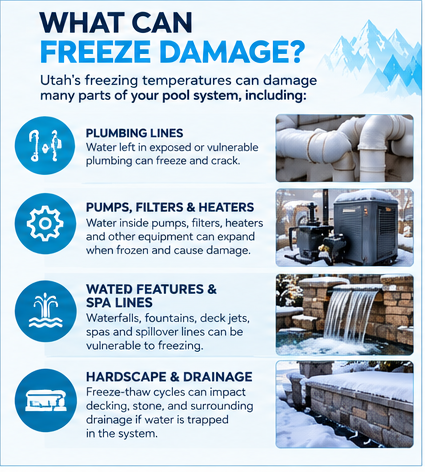
Water expands when it freezes. If water remains trapped inside vulnerable plumbing lines, pumps, filters, heaters, water features, or other components, that expansion can potentially crack or damage them. That's why properly preparing the entire pool system matters—not just the water you can see.
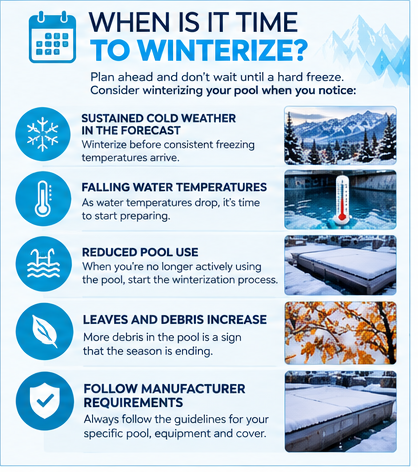
When Should You Winterize Your Pool in Utah?
There's no single calendar date that works for every Utah homeowner. Weather conditions vary from year to year and across Northern Utah, so it's better to watch temperatures and your pool usage than automatically close the pool on a specific date.
Generally, you should begin preparing once swimming season is clearly ending and colder weather is becoming consistent. Don't wait until the first hard freeze is already happening to start figuring out your winterization plan. If you're having your pool professionally winterized, schedule the service early enough that you're not competing with every other pool owner when cold weather suddenly arrives.
Step 1: Clean the Pool Thoroughly
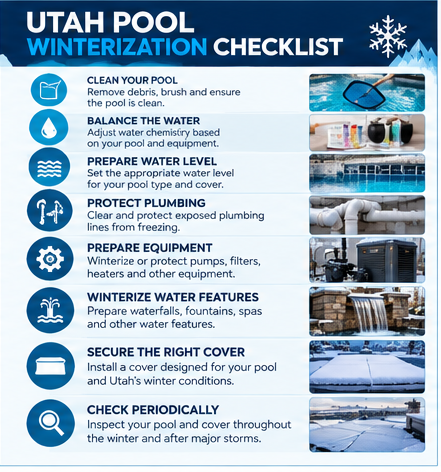
Start with a clean pool. Remove leaves and other debris from the water and clean the pool surfaces as appropriate.
That may include:
Skimming leaves and debris
Emptying baskets
Brushing walls or surfaces
Vacuuming or cleaning the pool
Cleaning around steps and benches
You don't want months of debris sitting in the pool underneath the winter cover. Fall leaves can make this stage particularly important for Utah backyards with mature landscaping.
Step 2: Test and Balance the Water
The next step is making sure your pool water is properly balanced before closing.
Depending on your pool system, that may involve checking:
pH
Alkalinity
Sanitizer
Calcium hardness
Other system-specific chemistry
Balanced water helps protect pool surfaces and equipment during the months the pool isn't being actively used. Your specific closing chemistry should follow the recommendations for your pool surface, sanitation system, and equipment.
Step 3: Manage the Water Level Correctly
One common misconception is that winterizing a pool means draining it. Do not assume you should completely drain your pool for winter. The appropriate water level depends on factors such as the type of pool, plumbing configuration, skimmer setup, and cover system. Draining too much water can create its own problems.
Follow the winterization requirements for your particular pool rather than applying a generic water-level recommendation.
Step 4: Protect the Plumbing
This is one of the most important parts of winterizing a pool in Utah. Any plumbing that could retain water and be exposed to freezing conditions needs an appropriate winterization strategy.
That can include plumbing associated with:
Pool returns
Skimmers
Main circulation
Water features
Deck jets
Fountains
The exact procedure depends on how the system was designed. Because freeze damage to underground or difficult-to-access plumbing can be expensive to repair, this is one area where homeowners who aren't completely comfortable with the process may prefer professional winterization.
Step 5: Prepare Pumps, Filters and Heaters
Your equipment pad needs attention too. Pumps, filters, heaters, sanitation equipment, and other components may retain water after normal operation stops. Each component should be prepared according to the manufacturer's instructions and the way your pool system is configured.
This is also a good opportunity to inspect equipment for signs of wear or problems. Discovering an issue during closing gives you time to address it before next swimming season rather than finding it the first warm weekend of spring.
Step 6: Winterize Water Features
If your pool includes water features, don't forget about them.
That could include:
Waterfalls
Sheer descents
Deck jets
Fountains
Spa spillovers
Specialty jets
These features often have dedicated plumbing that also needs protection from freezing temperatures. A beautiful waterfall in July can become a vulnerable part of the system in January if its plumbing wasn't included in the winterization process.
Step 7: Prepare Your Pool Cover
Once the pool and equipment have been prepared, it's time to secure the pool for winter. The appropriate cover depends on the pool and cover system installed. A good winter setup can help keep leaves and other debris out of the water while protecting the pool throughout the off-season.
If you have an automatic pool cover, follow the manufacturer's instructions for winter operation, snow accumulation, and maintenance. Don't assume every automatic cover is designed to handle winter conditions in exactly the same way.
Step 8: Don't Ignore the Pool After You Close It
Winterizing doesn't mean forgetting the backyard exists until April. Periodically check the pool area throughout winter, particularly after major snowstorms or significant weather changes.
Keep an eye on:
Pool cover condition
Snow accumulation
Standing water
Drainage
Equipment area
Surrounding hardscape
If something looks unusual, dealing with it during winter may be easier than discovering a much larger problem during spring opening.
What About Snow on Your Pool Cover?
Snow is a normal part of winter in Northern Utah, but how it should be managed depends on your particular pool cover. Different covers have different designs and load requirements. Follow the instructions provided by your pool builder and cover manufacturer regarding snow and ice.
Avoid using sharp tools or equipment that could damage the cover while attempting to remove snow.
What About an Integrated Spa?
An integrated spa may require a different winter strategy than the swimming pool. Some homeowners may choose to winterize the entire system. Others may have equipment intentionally designed to support different seasonal operation.
If you want to use a spa during winter, that should ideally be discussed when the pool is designed because plumbing, heating, circulation, covers, and controls all play a role.
Can You Leave Your Pool Open All Winter?
Some pools can be intentionally designed and operated during Utah winters, but that's very different from simply deciding not to winterize.
A winter-operating pool needs an appropriate plan for:
Heating
Circulation
Freeze protection
Equipment operation
Covers
Water chemistry
Power outages
Extreme cold
If winter swimming is something you're considering, read our Can You Have a Pool in Utah Winters? guide for a deeper look at keeping a pool operational through colder weather.
What Happens If You Don't Winterize a Pool Properly?
Improper winterization can expose several components to potential freeze damage. Problems may involve plumbing, pumps, filters, heaters, water features, or other equipment containing water. And not every issue will necessarily be obvious during winter. Sometimes damage isn't discovered until the system is restarted in spring.
That makes proper fall preparation one of those pool-maintenance tasks where preventing the problem is much easier than repairing it afterward.
Don't Forget About Freeze-Thaw Cycles Around the Pool
The water isn't the only part of your backyard dealing with winter. Utah's freeze-thaw cycles can also affect the areas surrounding your pool.
That includes:
Decking
Pavers
Retaining walls
Drainage
Soil
Proper drainage is especially important because water collecting around hardscape can repeatedly freeze and thaw throughout winter. This is one reason Summit approaches pools as part of a complete outdoor environment rather than an isolated feature in the backyard.
DIY vs. Professional Pool Winterization
Can homeowners winterize their own pools? Some can. If you understand your pool's plumbing layout, equipment, cover system, and manufacturer requirements, you may be comfortable handling seasonal closing yourself. But every pool is different.
Custom pools can include multiple pumps, heaters, integrated spas, automatic covers, waterfalls, deck jets, sanitation systems, automation, and other components. Missing one vulnerable line can potentially create a much bigger problem.
If you're unsure about any part of the process, professional winterization can provide peace of mind that the entire system has been addressed.
Make Spring Opening Easier
One of the best reasons to winterize carefully is that you're really preparing for next spring. A properly closed pool should make reopening more straightforward. When warmer weather returns, spring opening may involve removing or opening the cover, inspecting plumbing and equipment, restarting circulation, cleaning the pool, balancing the water, and testing heaters and automation.
The work you do in fall can directly affect how smoothly that process goes.
A Utah Pool Should Be Designed for Winter From Day One
Winterization becomes easier when winter was considered during the original pool design.
Thoughtful design can include:
Accessible equipment
Logical plumbing layouts
Appropriate drainage
Automatic controls
Quality pool covers
Efficient equipment
Thoughtful water-feature design
Proper site preparation
A pool shouldn't only be designed for the days you're swimming in it. In Northern Utah, it also needs to be designed for the months when snow is sitting beside it.
Protect Your Pool Before Utah Winter Arrives
Winterization isn't the most exciting part of owning a swimming pool. But it's one of the most important.
Taking the time to clean and balance the water, protect plumbing and equipment, prepare water features, secure the appropriate cover, and monitor the pool throughout winter can help protect your investment until swimming season returns.
And if you're still planning your pool, winter performance should be part of the conversation from the beginning.
At Summit Pools & Landscape, we design complete outdoor environments for Northern Utah's actual four-season climate—from hot summer pool days to freezing winter nights.
Frequently Asked Questions
-
There isn't one closing date that works every year. Utah homeowners should watch local weather conditions and prepare the pool before sustained freezing temperatures arrive. Scheduling professional winterization before the first hard freeze also helps avoid the seasonal rush.
-
Generally, you should not assume an inground pool needs to be completely drained. The correct winter water level depends on the pool, plumbing, skimmer configuration, and cover system. Follow the requirements for your specific pool.
-
Water expands when it freezes. Water trapped inside vulnerable pool plumbing can potentially crack pipes, fittings, or equipment, which is why protecting plumbing is one of the most important parts of winterization.
-
Some pools can be designed and operated during Utah winters, but they require an appropriate strategy for heating, circulation, freeze protection, covers, equipment monitoring, and extreme cold. Simply skipping winterization is not the same as operating a properly designed winter pool.
-
Homeowners familiar with their pool's plumbing and equipment may choose to winterize it themselves. Pools with integrated spas, water features, complex plumbing, automatic covers, or specialized equipment can be more complicated, making professional winterization a good option for many homeowners.
