
Utah's four distinct seasons are one of the things that make living here special. But those changing seasons can be tough on your swimming pool.
During winter, temperatures around your pool can repeatedly rise above freezing during the day and fall below freezing again at night. Water melts, moves into small cracks and porous surfaces, freezes again, expands, and eventually thaws. This repeated process is known as a freeze-thaw cycle.
One freeze may not seem like a big deal. But repeated freeze-thaw cycles throughout a Utah winter can put stress on pool decking, coping, tile, grout, water features, plumbing, and the surrounding hardscape.
Understanding what's happening—and designing and maintaining your pool with Utah's climate in mind—can help protect your backyard investment.
What Is a Freeze-Thaw Cycle?
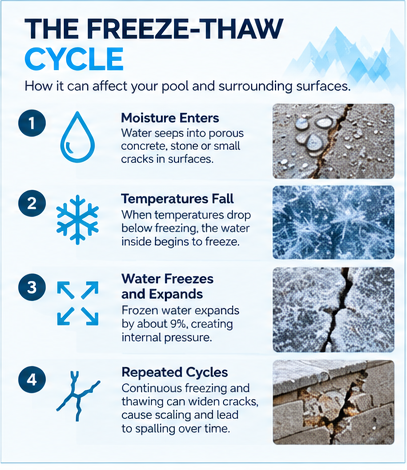
A freeze-thaw cycle happens when temperatures repeatedly move above and below freezing.
Around a swimming pool, the process generally looks something like this:
Snow, ice, rain, pool water, or runoff introduces moisture.
Water enters porous materials, joints, or small cracks.
Temperatures fall below freezing.
The water freezes and expands.
Temperatures rise and the ice thaws.
Water can move deeper into existing openings.
The process repeats during the next freeze.
Water expands by roughly 9% when it freezes. When that happens inside saturated concrete, it can generate enough pressure to contribute to cracking and surface deterioration.
Why Freeze-Thaw Cycles Matter Around a Pool
Pools naturally create an environment where water and hardscape meet. During swimming season, that's exactly what you want.
During winter, however, moisture can come from several places:
Snow accumulation
Melting snow
Ice
Rain
Pool water
Irrigation
Roof runoff
Poor drainage
Water trapped in joints or cracks
If moisture remains in vulnerable areas when temperatures drop, freezing can create additional stress.
The more frequently an area becomes saturated and freezes, the more opportunity there is for deterioration over time. Research on concrete durability shows that repeated freezing and thawing is particularly problematic when concrete contains significant moisture.
Pool Decking Is One of the Most Visible Areas
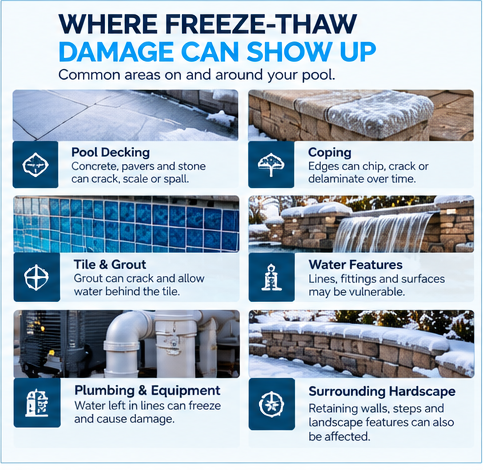
Your pool deck is exposed to the elements all winter. Concrete is porous, which means moisture can penetrate the surface. If that moisture freezes, repeated cycles can eventually contribute to surface deterioration.
You may notice:
Small cracks
Flaking
Scaling
Spalling
Pitting
Widening existing cracks
Deteriorating joints
Freeze-thaw damage is a recognized cause of pool-deck cracking and surface flaking. Existing cracks can make matters worse because they provide another path for moisture to enter the concrete. That doesn't mean every hairline crack around a pool indicates a serious problem. Concrete naturally develops some cracking.
The important thing is to watch for changes over time.
What Is Concrete Scaling?
Scaling occurs when the surface of hardened concrete begins to flake or peel away. It can begin as relatively small patches and become more noticeable after repeated exposure.
Concrete that becomes saturated with water and then experiences freezing and thawing is particularly susceptible. Deicing chemicals can make scaling worse in some conditions.
For homeowners, scaling may initially look cosmetic. But progressive surface deterioration can affect both the appearance and longevity of your pool deck.
What About Spalling?
Spalling is another form of concrete deterioration where portions of the surface break, chip, or flake away. Freeze-thaw exposure isn't the only possible cause of spalling, but water repeatedly freezing within porous concrete can contribute to the problem.
If you're seeing larger areas deteriorating rather than a few minor surface imperfections, it's worth having the condition evaluated.
Pool Coping Can Be Affected Too
Coping forms the finished edge around your swimming pool. Because of its location, it's regularly exposed to water during swimming season and winter weather during the colder months.
Freeze-thaw movement can potentially affect:
Coping joints
Mortar
Grout
Sealants
Stone
Concrete coping
Small openings between materials can allow water to enter. Once temperatures drop, trapped moisture may freeze and place additional stress on already vulnerable areas.
Tile and Grout Need Attention
Pool tile and grout can also be vulnerable when moisture reaches areas it shouldn't. The problem isn't necessarily the tile itself. It's often the water behind or around it. If water enters cracks, grout joints, or gaps and then freezes, expansion can put pressure on the surrounding material.
Signs worth watching for include:
Cracked grout
Loose tile
Missing grout
Cracked tile
Separation between materials
Catching small problems early may help keep water from finding its way farther into the assembly.
Water Features Create Additional Winter Considerations
Waterfalls, fountains, deck jets, and other water features add movement and character to a pool during summer. They also add additional plumbing, surfaces, joints, and places where water can collect.
Depending on the design, winter preparation may need to account for:
Waterfall plumbing
Fountain lines
Deck jets
Sheer descents
Spillways
Pumps
Valves
Stonework
That's one reason proper winterization should address the entire pool system, not just the main pool basin.
Plumbing and Pool Equipment Can Be Vulnerable
Freeze-thaw effects aren't limited to surfaces you can see. Water trapped inside vulnerable plumbing or equipment can freeze and expand.
Potentially vulnerable components can include:
Plumbing lines
Pumps
Filters
Heaters
Valves
Water-feature plumbing
Specialty equipment
Proper winterization is therefore about much more than simply placing a cover over the pool. Protecting plumbing and equipment from freezing is one of the most important parts of preparing a Utah pool for winter.
Drainage Plays a Major Role
One of the best ways to reduce freeze-thaw problems is also one of the simplest concepts: Manage the water. Standing water and poor drainage can repeatedly saturate concrete and other materials as snow melts and temperatures change.
Pool areas should be designed so water can move away appropriately rather than continually collecting against:
Pool decking
Retaining walls
Steps
Coping
Structures
Equipment areas
Correcting drainage problems is a recognized part of protecting exterior concrete because pooled snowmelt can aggravate freeze-thaw cracking and spalling. This is another reason the overall landscape design matters when building a pool.
Your Surrounding Hardscape Matters Too
Freeze-thaw cycles don't stop at the edge of your pool deck. Your entire outdoor living space is exposed to Utah winter weather.
That can include:
Patios
Pavers
Walkways
Outdoor kitchens
Fire features
Steps
Retaining walls
Landscape walls
Water needs somewhere to go throughout the property. A beautifully designed pool with poor surrounding drainage can still experience problems.
At Summit Pools & Landscape, looking at the entire outdoor environment helps us think about how the pool, hardscape, grading, drainage, and landscaping work together throughout all four seasons.
Can Pool Deck Sealer Help?
Depending on the type of concrete and finish, an appropriate sealer can help reduce moisture penetration. That's valuable in freeze-thaw climates because less water entering the surface means less moisture available to freeze inside it.
Sealing doesn't make concrete invincible, and the correct product and application depend on the surface. But concrete experts specifically recommend appropriate protection for exterior concrete exposed to freezing conditions.
Talk with your pool builder or concrete professional before applying products to decorative pool decking. Slip resistance also needs to remain an important consideration around swimming pools.
Be Careful With De-icing Products Around Your Pool
When snow and ice collect on outdoor surfaces, reaching for de-icer can seem like the obvious solution. But not every product is appropriate for every pool deck or hardscape material. De-icing salts can worsen freeze-thaw deterioration in concrete under certain conditions. Before applying a de-icer around the pool, check the recommendations for the specific decking, coping, pavers, stone, and sealers installed in your backyard.
Repair Small Problems Before Winter
Fall is a great time to walk around the pool and inspect it carefully.
Look for:
Cracks
Loose coping
Missing grout
Damaged sealant
Drainage problems
Damaged decking
Loose tile
Areas where water regularly collects
Small openings give moisture another way into a surface. Existing cracks can become more vulnerable when water enters them and repeatedly freezes.
Not every crack needs an emergency repair, but identifying problems before winter gives you the opportunity to determine what needs attention.
Proper Winterization Protects More Than the Pool Water
Winterizing a Utah pool should address all the parts of the system that could be affected by freezing conditions.
Depending on your pool, that may include:
Balancing the water
Managing the appropriate water level
Protecting plumbing
Preparing pumps and filters
Preparing the heater
Winterizing water features
Securing the proper pool cover
Checking surrounding drainage
Our How to Winterize Your Pool in Utah guide walks through this process in more detail.
What Should You Check After Winter?
Spring is the time to see how everything handled the colder months. Before jumping straight into swimming season, walk around the pool and compare surfaces with how they looked in fall.
Look for:
New cracks
Cracks that became wider
Loose coping
Flaking concrete
Surface scaling
Loose tile
Damaged grout
Movement in pavers
Drainage issues
Equipment problems
If something has noticeably changed, determine the cause before simply covering it with a cosmetic repair. A crack caused by movement or drainage needs a different solution than a minor surface blemish.
Can You Prevent All Freeze-Thaw Damage?
Probably not forever. Pools and outdoor living spaces exist outdoors, and Utah weather will always put materials through seasonal changes. But good design and maintenance can make a significant difference.
That starts with choosing materials appropriate for the environment and continues with:
Proper installation
Appropriate concrete design
Good drainage
Quality construction
Correct winterization
Maintaining joints and sealants
Addressing cracks
Following manufacturer recommendations
Periodic inspections
For concrete specifically, air entrainment is commonly used to improve freeze-thaw resistance by providing microscopic spaces that help relieve pressure when absorbed water freezes.
These aren't things homeowners necessarily need to calculate themselves. They're reasons choosing contractors familiar with Utah's climate matters.
Design Your Pool for Utah's Four Seasons
It's easy to design a swimming pool while imagining July. The water is warm. The landscaping is green. Everyone is outside. But a Utah pool also needs to work in January.
That means thinking about winter from the beginning:
Where will snowmelt go?
How will the pool be winterized?
Are the materials appropriate for freeze-thaw exposure?
How will water features be protected?
What happens around the equipment pad?
How will the hardscape handle four seasons?
Those questions may not be as exciting as choosing tile or designing a waterfall, but they can be just as important to the long-term success of your backyard.
At Summit Pools & Landscape, we design pools and complete outdoor environments specifically for Northern Utah—where your backyard needs to perform through hot summers, snowy winters, and everything in between.
Related articles
Frequently Asked Questions
-
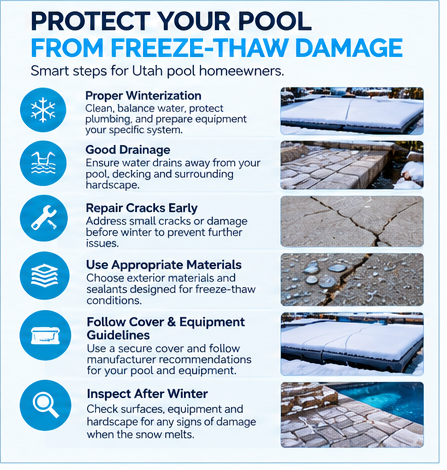
A freeze-thaw cycle occurs when moisture freezes as temperatures fall below freezing and then thaws when temperatures rise again. Repeated cycles can stress saturated concrete and other pool-area materials over time.
-
Yes. Water can enter porous concrete and existing cracks. When that moisture freezes and expands, repeated cycles can contribute to cracking, scaling, and spalling.
-
Potentially vulnerable areas include pool decking, coping, tile and grout, water features, plumbing, pumps, filters, heaters, and surrounding hardscape. The specific risks depend on the pool's materials and design.
-
Proper winterization, good drainage, repairing vulnerable cracks and joints, using appropriate materials, following equipment and cover recommendations, and inspecting the pool after winter can all help reduce risk.
-
Don't assume a deicing product is safe for your pool deck. Some deicing salts can worsen deterioration of concrete exposed to freeze-thaw conditions. Follow the recommendations for your specific decking, coping, stone, pavers, and sealer.
