
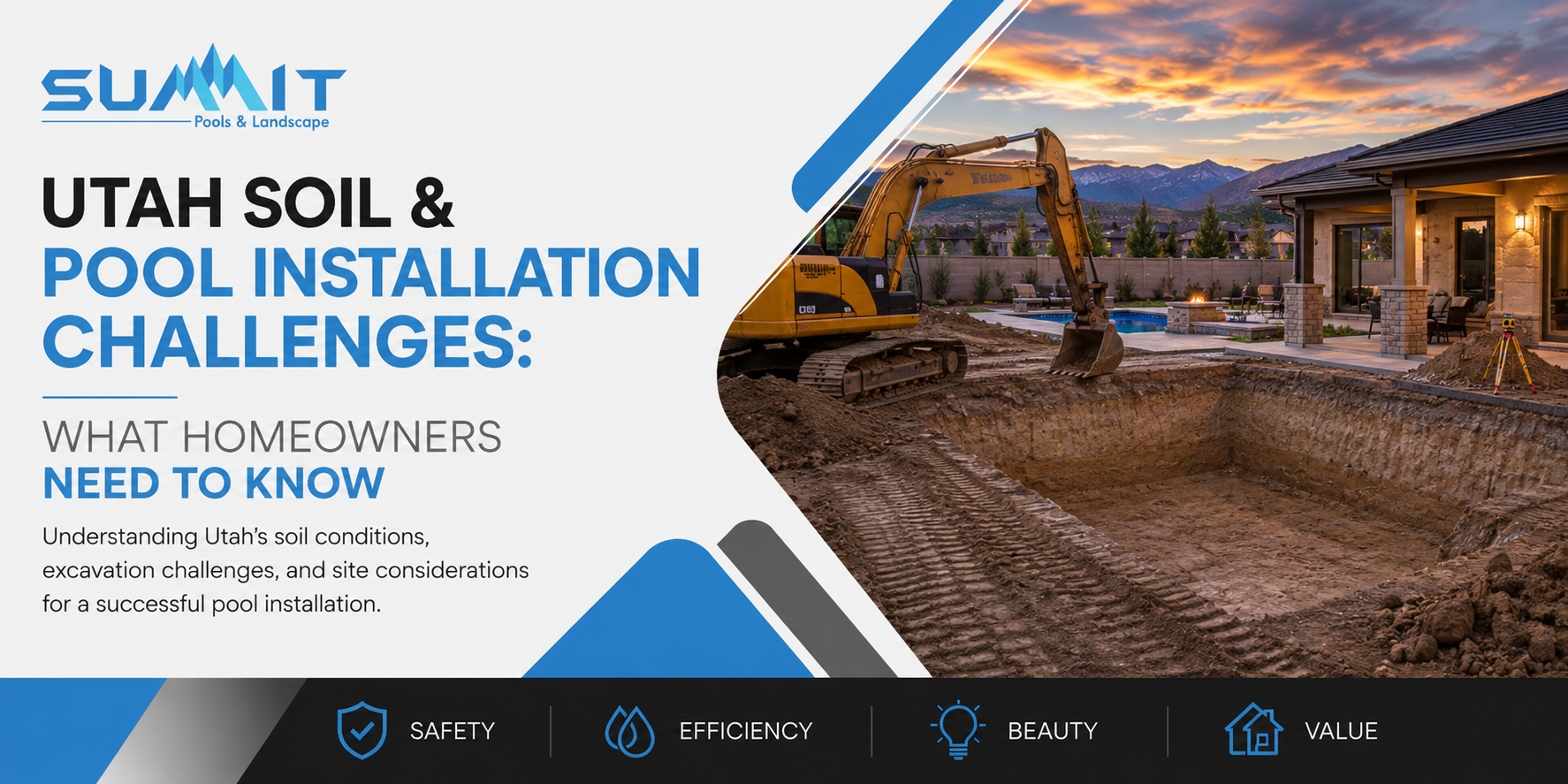
You can spend months choosing the perfect pool shape, tile, decking, spa, and outdoor kitchen—but one of the most important parts of your new pool is something you may never see once construction is finished:
The ground underneath it.
Soil conditions can have a major impact on pool installation in Utah. From expansive clay and rocky excavation to sloped properties and seasonal freeze-thaw cycles, Northern Utah presents construction challenges that aren't always obvious when you're standing in your backyard imagining your future pool.
That doesn't mean your property isn't suitable for a pool. It means proper planning matters.
If you're considering pool installation northern utah, understanding your property's soil, drainage, access, and elevation before construction begins can help prevent surprises and create a pool that's designed for long-term performance.
Why Utah Soil Matters When Building a Pool
An in-ground swimming pool is a significant structure. Once filled with water, it places substantial weight on the ground beneath it.
The soil supporting that structure needs to be properly evaluated and prepared.
Poor soil conditions or inadequate preparation can contribute to problems such as:
Settling
Cracking
Shifting decking
Drainage problems
Uneven surfaces
Damage to surrounding landscaping
The good news is that experienced Utah pool builders encounter challenging soil conditions regularly. Identifying those conditions before and during excavation allows the construction plan to be adjusted appropriately.
Common Soil Conditions in Northern Utah
Soil can vary dramatically from one neighborhood—or even one property—to another. That's one reason a site evaluation is so important.
Expansive Clay Soil
Clay is one of the biggest concerns when building structures in Utah.
Certain clay-rich soils absorb moisture and expand. When they dry, they contract.
That repeated movement can create pressure underneath concrete structures, decking, patios, and other hardscape features.
Proper excavation, base preparation, drainage, and engineering become particularly important when expansive soils are present.
Rocky Soil
Anyone who has tried digging around parts of Northern Utah knows what can sometimes be hiding underneath the surface.
Rocky ground can make excavation more difficult and may require additional equipment or labor.
This is particularly important when budgeting for a pool because excavation conditions aren't always completely visible before digging begins.
Our guide to the Hidden Costs of Building a Pool in Utah explains why site conditions are one factor homeowners should discuss with their contractor before construction.
Fill Soil
Some residential lots contain areas where soil was previously moved or added during development.
Fill material can behave differently from undisturbed native soil and may require additional evaluation or preparation before supporting a pool and surrounding hardscape.
This is another reason you shouldn't assume that because your neighbor's excavation was easy, yours will be too.
Northern Utah's Freeze-Thaw Cycles Add Another Challenge
Soil isn't the only consideration.
Northern Utah experiences freezing winters followed by warmer spring temperatures. Moisture in the ground can freeze, expand, thaw, and move.
Over time, repeated freeze-thaw cycles can affect:
Pool decking
Concrete
Retaining walls
Plumbing
Patios
Landscaping
Pools in Salt Lake City, Davis County, Weber County, Ogden, and Layton need to be designed with Utah's seasons in mind.
Proper drainage is especially important because controlling where water travels around the pool can help reduce unnecessary soil saturation and movement.
Drainage Can Be Just as Important as Soil
A beautiful backyard can still become problematic if water doesn't have somewhere to go.
Before beginning a custom pool installation utah project, contractors should consider how water naturally moves across the property.
That includes water from:
Rain
Snowmelt
Irrigation
Roof downspouts
Pool decking
Landscaping
Why Pool Deck Drainage Matters
Your pool deck should direct water appropriately rather than allowing it to collect around the pool structure or flow toward the house.
Depending on the property, drainage solutions may include grading, drains, or other systems designed specifically for the site.
Drainage isn't one of the glamorous parts of building a pool, but it's one of the details that can make a major difference over the life of the project.
Sloped Utah Backyards Create Opportunities—and Challenges
Many Northern Utah homes are built on properties with incredible mountain or valley views.
Those same properties can also have significant elevation changes.
A sloped backyard doesn't necessarily prevent you from building a pool. In fact, elevation changes can create some of the most impressive custom backyard designs.
They may allow for features such as:
Raised spas
Waterfalls
Multi-level patios
Retaining walls
Elevated lounge areas
Vanishing-edge-inspired designs
However, slopes may also require more extensive engineering, excavation, drainage planning, and retaining structures.
If you're comparing pool builders near me, ask how they approach elevation changes before choosing a contractor.
Backyard Access Can Affect Excavation Too
Soil conditions aren't the only thing determining how difficult excavation will be.
Contractors also need to get equipment into your backyard.
Access may be affected by:
Narrow side yards
Existing fences
Neighboring homes
Retaining walls
Mature landscaping
Utility locations
Sloped terrain
Easy equipment access can make excavation relatively straightforward. Tight-access properties may require smaller machinery, additional labor, or temporary removal of fences and landscaping.
These are details that should be identified during the planning process rather than after construction begins.
What Happens If Difficult Soil Is Found During Excavation?
Finding rock, clay, or unexpected site conditions doesn't automatically mean your project is in trouble.
It means the contractor needs to determine the appropriate next step.
Depending on the conditions, solutions could involve additional excavation, replacing unsuitable material, improving the base, addressing drainage, or obtaining additional engineering guidance.
This is where choosing a contractor based solely on the lowest price can become risky.
An experienced pool builder should understand that the goal isn't simply getting the pool into the ground—it's building the entire project correctly for the conditions of that particular property.
Can Soil Conditions Increase the Cost of a Pool?
Yes.
More challenging properties may require additional:
Excavation
Equipment
Hauling
Base preparation
Drainage
Engineering
Retaining walls
Labor
That's why online "average pool prices" can only tell you so much.
Two homeowners could choose nearly identical pools but receive different project estimates because one property is flat with easy access while the other has rocky soil, limited equipment access, and a significant slope.
For a more complete breakdown, read How Much Does It Cost to Build a Pool in Utah? (2026 Pricing Guide).
Why Local Pool-Building Experience Matters
Utah isn't Arizona, Florida, or Southern California.
Our pools have to live through hot, dry summers, freezing winters, snow, changing soil moisture, and repeated freeze-thaw cycles.
A contractor experienced with pool installation northern utah understands that what's underneath and around your pool matters just as much as what you see when the project is complete.
Local experience can be especially valuable when evaluating properties throughout:
Salt Lake City
Davis County
Layton
Weber County
Ogden
Surrounding Northern Utah communities
The objective should always be the same: design the pool around the property rather than forcing the property to fit a predetermined pool design.
Don't Let Challenging Soil Stop Your Dream Backyard
Rocky ground, clay soil, slopes, and drainage concerns don't necessarily mean you can't have the backyard you've been imagining.
They simply need to be addressed correctly.
A thorough site evaluation can help identify potential challenges early, establish realistic expectations, and determine the best approach for your property.
Once those fundamentals are handled correctly, you can focus on the exciting part: creating a pool and outdoor living space your family will enjoy for years.
Ready to Find Out What's Possible in Your Backyard?
If you're considering a pool in Northern Utah, the best place to start is with your actual property—not an online estimate.
Summit Pools can evaluate your backyard, discuss your goals, identify potential site considerations, and help you understand what may be involved in transforming your space.
Schedule a pool consultation today and let's find out what's possible in your backyard.
Frequently Asked Questions
-
Expansive clay, rocky ground, unstable fill, and poorly draining soils can make pool construction more complicated. The specific conditions vary by property, which is why site evaluation and proper preparation are important.
-
Pools can be built on properties with clay soil, but expansive soil may require additional preparation, drainage considerations, or engineering depending on the site conditions.
-
Yes. Sloped properties can accommodate beautiful custom pools, but they may require additional excavation, retaining walls, drainage solutions, or engineering.
-
Northern Utah's freeze-thaw cycles can affect soil, concrete, decking, plumbing, and surrounding hardscape. Pools should be designed and constructed with local seasonal conditions in mind.
-
It can. Rock excavation, unsuitable soil, difficult access, drainage work, retaining walls, or additional engineering can increase construction costs. A site-specific consultation provides a more accurate picture than a generic online estimate.
